
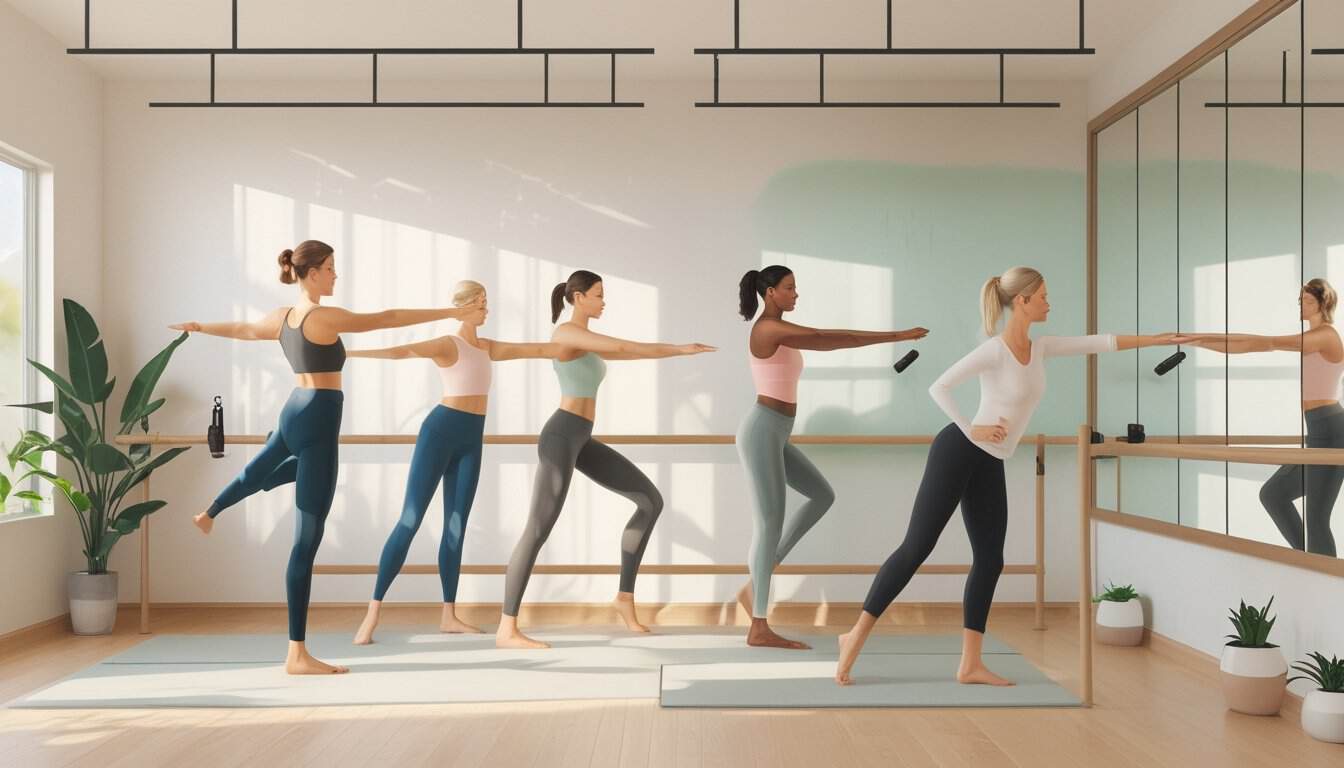
What Pilates Barre Is and Why It Helps
Pilates barre combines the controlled movement principles of Pilates with the small, repetitive, ballet-inspired work of barre. The result is a workout style that focuses on posture, core stability, muscle endurance, and body awareness. For many people, it solves a common problem: wanting a low-impact exercise routine that still feels challenging, effective, and easy to fit into a busy week.
Unlike high-impact training, pilates barre usually keeps movements small and precise. That makes it appealing for beginners, people returning to exercise, and anyone who prefers a gentler way to build strength. It is also easy to adapt, which is one reason it continues to grow in popularity in studios and online classes.
How a Pilates Barre Class Works
A typical pilates barre class blends standing sequences, floor-based Pilates moves, and light equipment such as a ballet barre, resistance bands, or small weights. The class often begins with a short warm-up, then moves into exercises that target the legs, glutes, core, arms, and stabilising muscles. Many of the movements involve pulses, holds, and controlled repetitions rather than large ranges of motion. Related source: https://la-pilatesstudio.com/barre-pilates/.
This format helps solve a common fitness challenge: balancing strength work with joint-friendly movement. Because the exercises are low-impact, the class can feel accessible while still creating a strong burn in the muscles. The emphasis on alignment also encourages better movement habits outside class, which can be useful for people who sit for long hours or feel stiff from daily routines.
Key Benefits People Usually Notice
Many participants notice improved posture, stronger core engagement, and greater lower-body endurance after regular practice. The combination of Pilates and barre also supports coordination and balance, since the body must stay controlled through each movement. Over time, this can make everyday activities feel easier, from climbing stairs to standing for longer periods.
Another benefit is variety. Pilates barre classes often change enough to stay interesting without becoming overwhelming. That helps people stay consistent, which is usually the biggest factor in seeing results.
How to Start Pilates Barre Safely and Get Better Results
For someone new to pilates barre, the best approach is to begin with a beginner-friendly class and focus on technique rather than intensity. Good form matters more than how many repetitions are completed. It is also helpful to wear comfortable, fitted clothing so alignment can be seen more clearly, especially in studio classes.
To get better results, consistency is usually more effective than occasional intense sessions. A steady weekly routine, combined with proper hydration and rest, can help the body adapt and recover well. People who want extra support may also benefit from cross-training with walking, stretching, or light strength work so the body stays balanced and less prone to overuse.
Overall, pilates barre works well for people who want a structured, enjoyable workout that feels strong but manageable. It offers a practical solution for building stability, improving posture, and staying active without relying on high-impact exercise.
Sources: American Council on Exercise, “Barre Fitness”; Mayo Clinic, “Fitness basics”; Harvard Health Publishing, “Why core strength matters.”
